AMI / CMA (France 2030)

AMI / CMA (France 2030)


COMETES

Cometes

To meet the growing needs of the space and New Space industries, COMETES embodies a strong collective dynamic. Supported by the Toulouse Community of Universities and Establishments in conjunction with academic establishments (in particular the ISAE group, several universities and schools and 5 university space centres), local authorities (Occitanie and Nouvelle-Aquitaine regions) and industrial players, COMETES is part of a national synergy.
The aim is to “train 11,000 apprentices and raise awareness of space-related issues among 300,000 people”.
The South-West Skills Space Diagnostic (DESCO) produced by the Aerospace Valley cluster in 2023 highlighted the need to expand post-baccalaureate provision for technicians and to strengthen training at engineer and master’s level. COMETES is responding to these challenges by developing training pathways and skills in the Space professions. The objectives are ambitious: to train 11,000 apprentices in five years, create around ten initial and continuing training courses and raise awareness of space-related issues among 300,000 people.
The project is based on existing courses, which will be enriched by new courses of excellence, to meet the growing need for skills in a space sector undergoing major transformation, with major civil and military issues at stake. Joint modules will also be developed between institutions in areas such as Big Data, systems engineering and space launchers.
Launched for 5 years, COMETES has an overall budget of €45 million, with an allocation of €20 million received as part of the “Skills and professions of the future” call for expressions of interest.
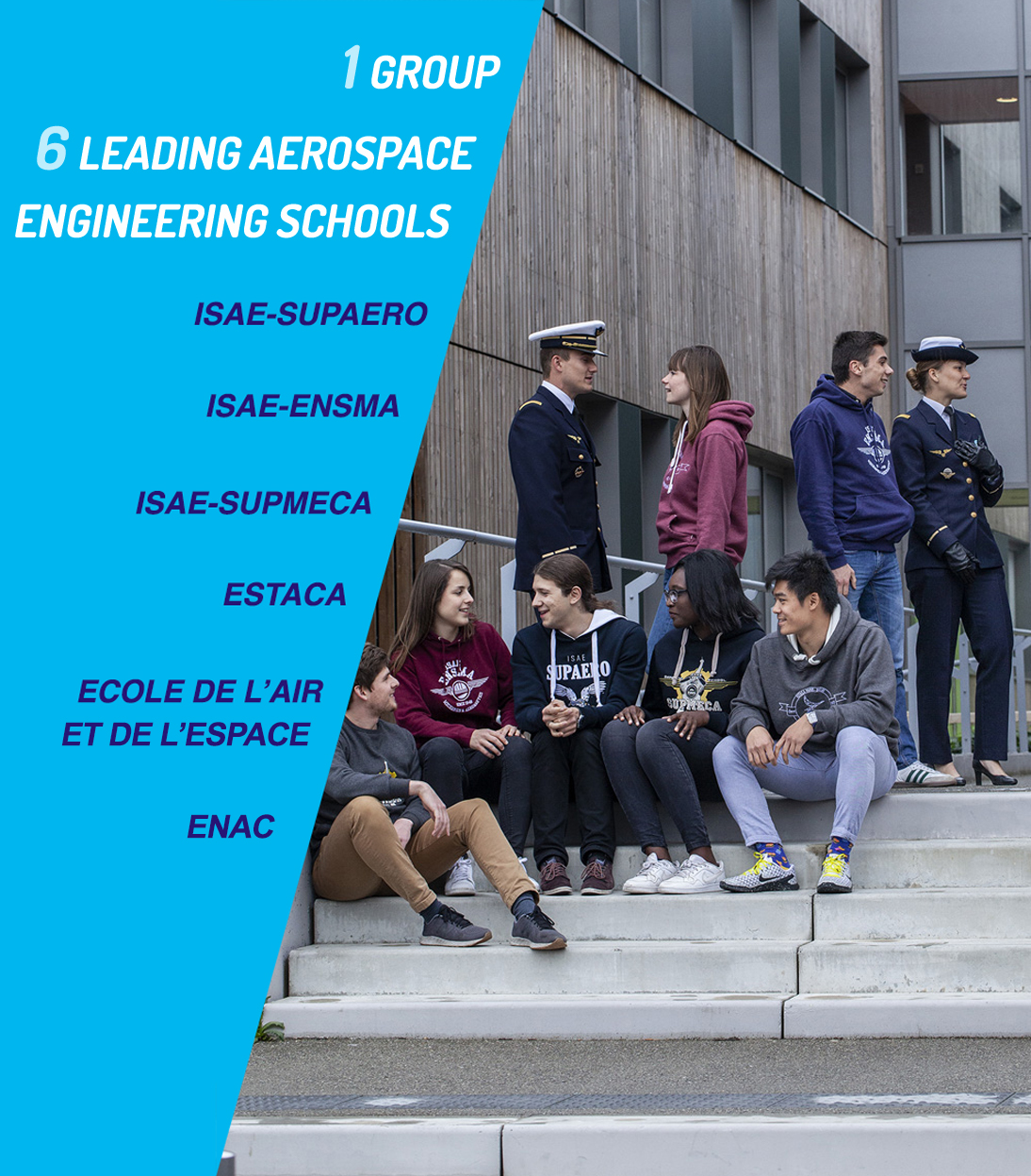
The schools of the ISAE Group involved in the project are: ISAE-SUPAERO, ISAE-ENSMA, ISAE-SUPMECA, Ecole de l’Air et de l’Espace, ESTIA.

PEGASE

Pegase

The Generalised Development Process for Zero-Emission Aircraft (PEGASE) is a national programme that was launched in January 2026 to adapt training programmes to the current needs of the aeronautics sector by fully integrating environmental challenges into the curriculum.
The winner of the ‘Skills and Professions of the Future’ call for expressions of interest under the France 2030 plan, COMETES, is led by the University of Toulouse. It brings together a consortium of 41 partners, including higher education institutions, research centres, industrial players, local authorities and training organisations. The ISAE Group schools involved in PEGASE are as follows: ISAE-SUPAERO, ISAE-ENSMA, ISAE-SUPMECA, ENAC, ESTACA and ESTIA.


Research

Research


Focused on issues within the aeronautics and space sectors, the schools of the ISAE Group have mapped out their key research themes. Many of these themes are shared by several of the schools. The objectives are to foster collaborations between the schools' research teams and to generate new partnerships with industry, public institutions, and national research laboratories.

Research

ENSPIMA

 
ENSPIMA

ENSPIMA, created in 2019, is the sixth and last public engineering school of Bordeaux INP. It was built in partnership with the University of Bordeaux within the Evering Institute. The integration of this school into the institute has enabled us to bring together on a single site the various higher education courses related to aeronautical maintenance in the Nouvelle Aquitaine region in order to pool teaching and human resources (in particular the six aircraft (four planes and two helicopters) present at the institute). Its location at the foot of the runways of Mérignac Airport and in the midst of the aeronautical companies of the Bordeaux metropolitan area make it a unique location in France for a higher education institution.
The school trains high-level engineers capable of designing and implementing methods and techniques related to maintenance and industrial performance in aeronautics, space, and defense companies. It complements engineering training in “design” and “production” and aims to bridge the gap between the two in order to optimize the costs associated with future maintenance operations in both the civil and military sectors.
ENSPIMA has developed a strong international dimension, enabling all its second-year students to spend a full academic semester at one of our 40 international partners. The school's final academic semester is taught in English, which also allows it to welcome many international students.

More about ENSPIMAhttps://enspima.bordeaux-inp.fr/fr

ELISA

 
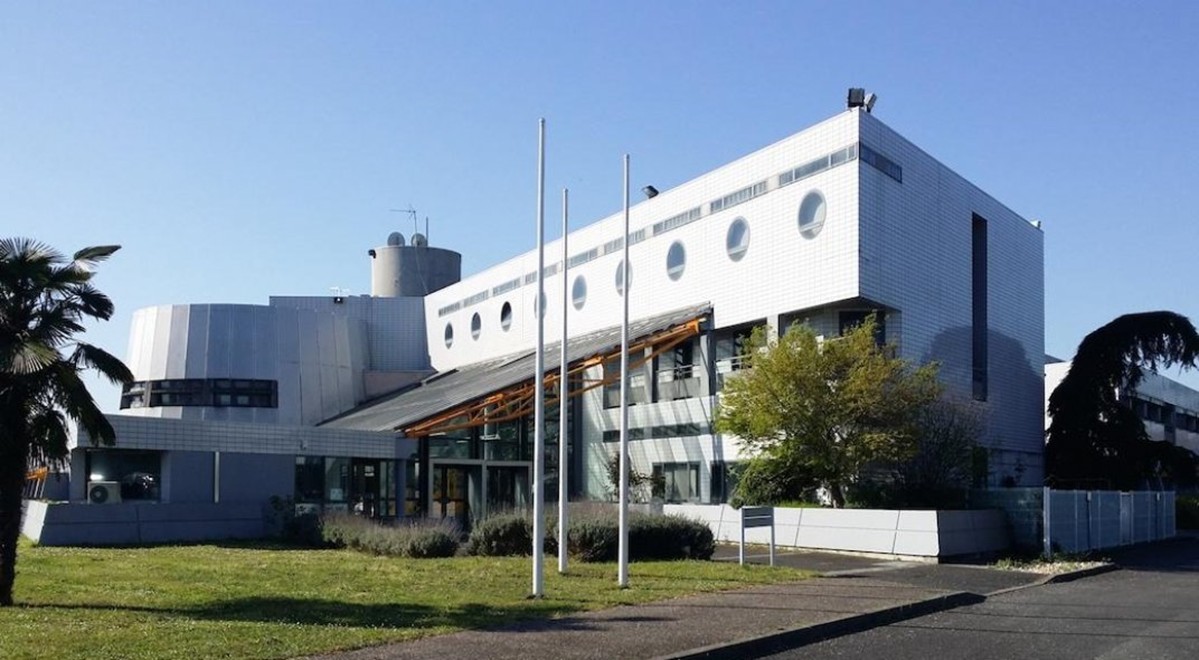
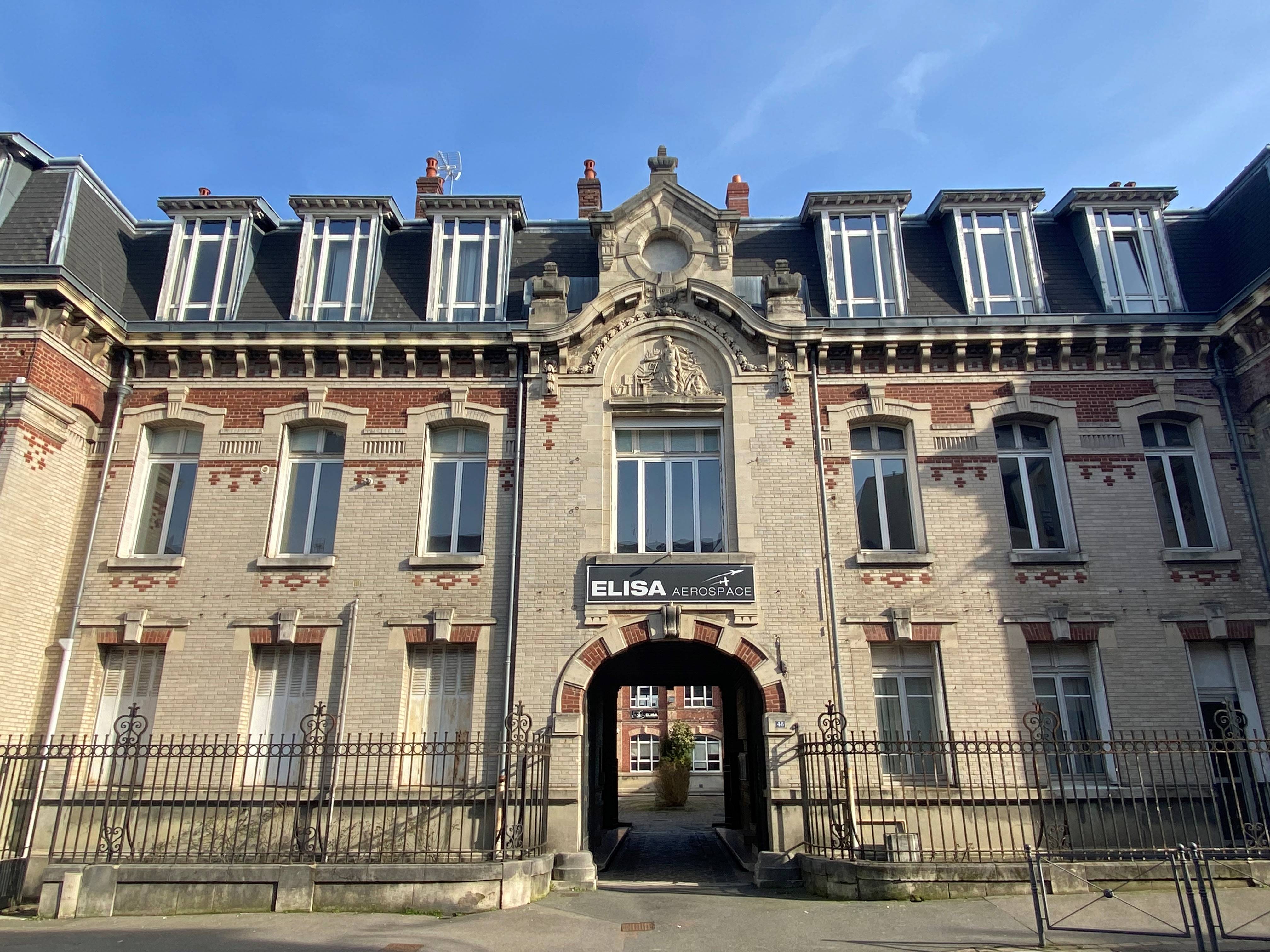
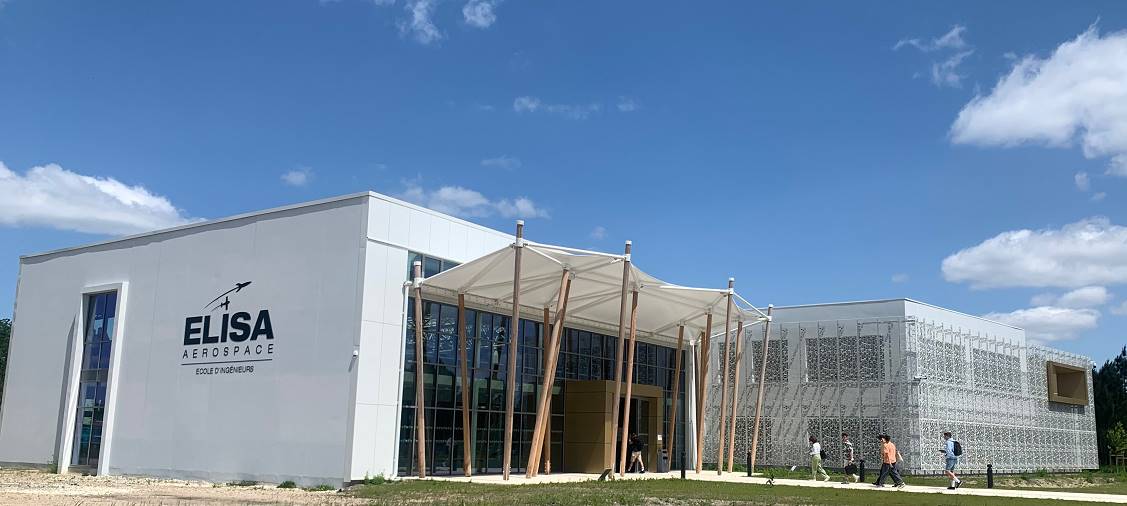
On its two campuses (Bordeaux and Saint-Quentin), the mission of ELISA Aerospace is to train scientific engineers and technical experts in systems engineering and senior technicians in the fields of aerospace and the transport of the future, which innovative companies need to meet today’s challenges and ensure their growth, both in France and abroad.
A place of life and humanism, the associations enable students not only to blossom, but also to belong to a community linking students, teachers and professionals in two business catchment areas, and eventually internationally.
ELISA Aerospace, school of aeronautics, school of space, school of the technologies of the future and the transport of the future, aims to be a gateway to the world of tomorrow. That’s why we want your training to enable you to understand and become aware of the challenges facing the aerospace and transport industries of the future. You’ll be sought out for your skills and your personality.
Elisa
Elisa

More about ELISA: http://www.elisa-aerospace.fr

ESTIA


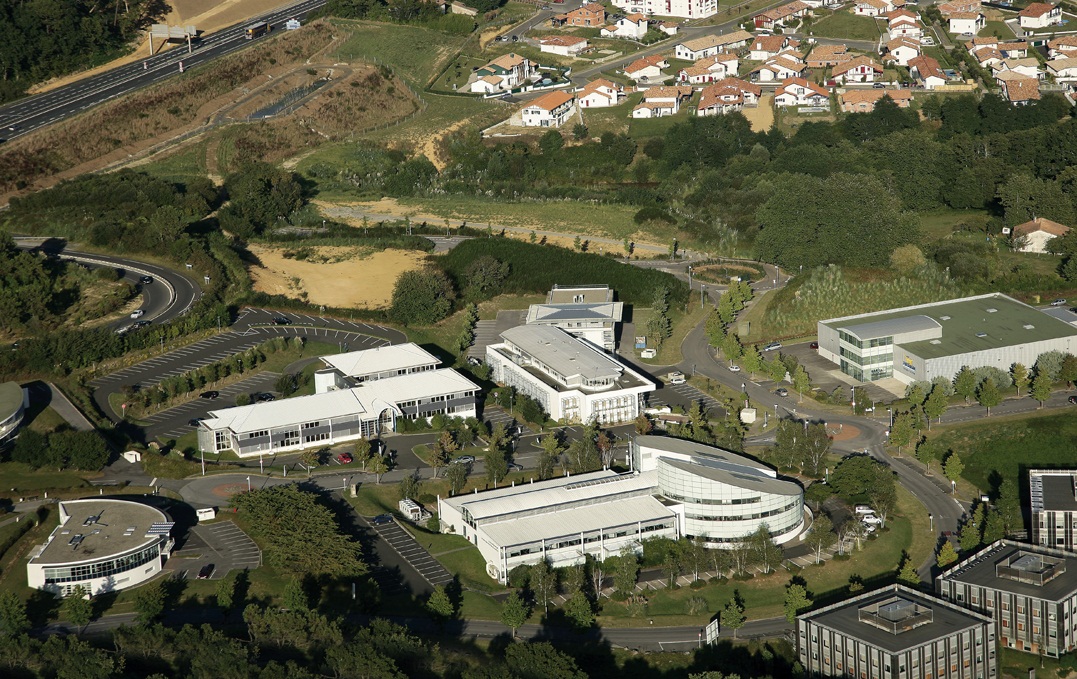
ESTIA is a generalist engineering school, subsidiary of CCI Bayonne Basque Country, in association with the University of Bordeaux. Multidisciplinary training (mechanical engineering, electrical and computer engineering) combined with strong characteristics (multilingualism, international, interaction with the company, creativity) contributes to prepare engineers specialists in human-system integration and technologies of industry 4.0 

More about ESTIA:  https://www.estia.fr

EIGSI

 
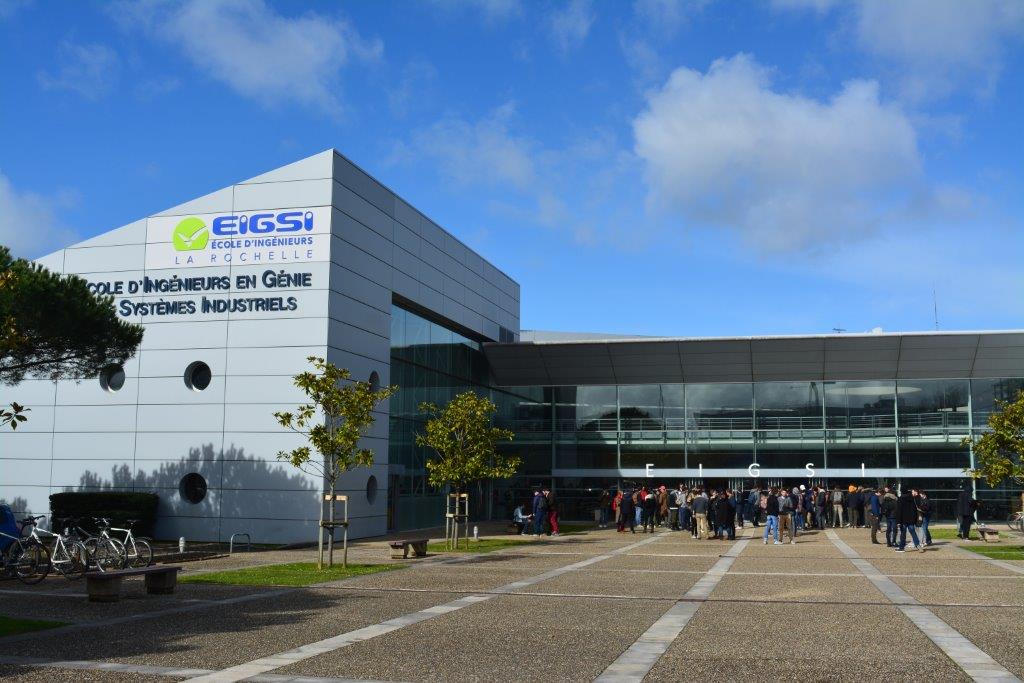
EIGSI has 1,600 students on its two campuses in La Rochelle and Casablanca and 10,000 alumni since it was founded in Paris in 1901. 
Thanks to their generalist training, EIGSI engineers create solutions for the future, and are prepared to meet the challenges of energy, mobility and industrial performance. 
EIGSI offers individualised study paths with a range of majors enabling students to refine their career plans and develop high-level skills in the design of complex systems, digital transformation, environmental transition or industrial and civil engineering. 
With a strong general scientific, technical and managerial culture, EIGSI engineers work in all sectors of activity, but mainly in transport and aeronautics. 
Acting for the main stakeholders in the sector, EIGSI engineers are also recognised for their openness and intercultural management skills. 
EIGSI has developed an international dimension that enables students to consolidate their studies with a double degree from prestigious international partners. 45 double degrees are offered in more than 15 countries. 
EIGSI's activity is part of a public service mission under contract with the State (EESPIG label). The school is a member of the CGE, the CDEFI and the UGEI. Its engineering degree is accredited by the CTI on its two campuses.
 
More about EIGSI: https://www.eigsi.fr